
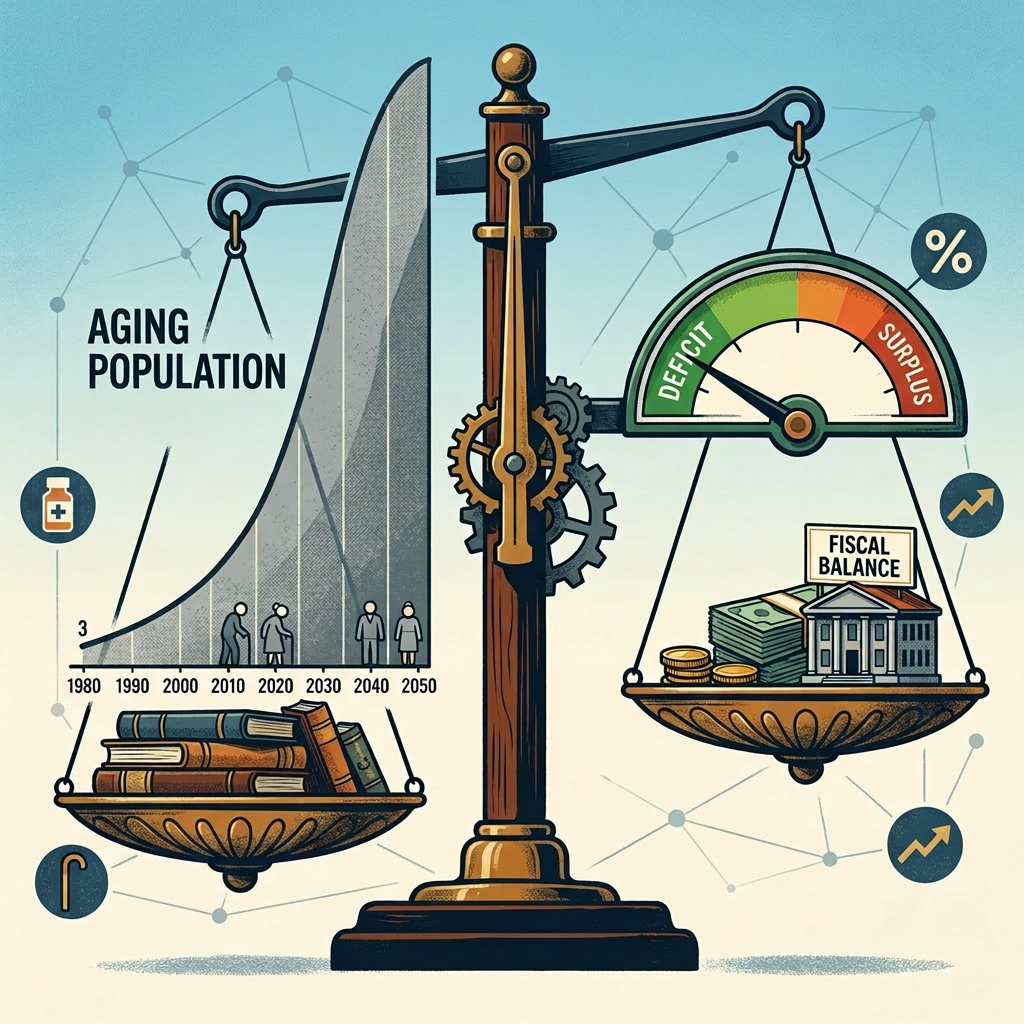
- The number of working-age adults to support a retiree is expected to drop from 4 working-age adults to 2 by 2065
- The cost of superannuation will rise from 5.1% of GDP to approximately 8% by 2065, and health costs from 7% to 10%.
- Inaction will make the problem and the road to affordability steeper. We are wasting time arguing about solutions; the scale of the problem means that we will need all of them.
We have a super problem. And we have a Winston problem. We are living longer, while birth rates are dropping. Currently, 4 working-age adults support a retiree. This is expected to be 2 working-age adults supporting a retiree by 2065. While most of the conversation is about the rising cost of superannuation, Treasury points out that healthcare costs will also skyrocket and productivity will drop. GDP per capita growth will slow as the productive share of the population drops. The tax-cutting path adopted, especially by the right-wing parties over the past few decades, has worsened the problem.
Treasury estimates that the cost of superannuation will rise from 5.1% of GDP to approximately 8% by 2065. Healthcare costs will rise from 7% to around 10%. GDP per capita is expected to drop 6% in the same period. They expect government revenue and spending per person (inflation-adjusted) to double if nothing changes. While there are many estimates in these calculations, it is prudent to plan for the worst.
Treasury’s current forecasts do not take into account contributions from the SuperFund (it plans to do so in the future), which will cover 13% of the superannuation cost at its peak by 2080 and will decline thereafter. Nor does it consider any possible impacts from KiwiSaver, which is currently voluntary.
Perhaps our main problem is political: Winston Peters and New Zealand First are blocking any action that would reduce superannuation, whether it is increasing the age of entitlement or means- and income-testing. While he cites the lower life expectancy of Māori as an excuse, it’s clear that his opposition stems from his large retiree voter base. We can easily adopt a flexible scheme like Germany’s to help those who work in physically demanding occupations. Those who have worked and paid taxes for 45 years can retire earlier without impacting their pensions.
Life expectancy is projected to increase from 82 to 88 years, based on growth over the past few decades. While growth may slow, health and life expectancy are expected to improve, especially among Māori and Pacifica. Immigration is another variable; while more immigration will help with the aging population in the medium term, the current global trend is anti-immigration, especially as a majority of immigrants tend to be non-white and from developing countries.
Improving health outcomes and reducing health costs for New Zealanders offer significant opportunities, especially with greater emphasis on prevention and primary care. Labour’s plan to offer three free GP visits per year could be one of the most consequential advances for our healthcare. Politics gets in the way of preventive measures. For example, a sugar tax and restrictions on junk food advertising, which are commonplace in European countries, are anathema to both major parties and their donors. Business interests override our health. Suffering due to ill-health, untimely deaths, and even higher costs in health dollars come a poor second to lobby groups for the junk food industry.
Our productivity is forecast to drop from current levels as the share of the working-age population supporting a larger number of retirees declines. GDP per capita is expected to drop 4-8% due to lower labour participation. New Zealand’s productivity has been stubbornly static for the past thirty years under both left- and right-wing governments.
New Zealand’s per capita GDP dropped precipitously during the period 1975-1985 due to the triple shocks – the collapse of wool prices in 1969, the UK’s entry into the European Common Market in 1973, and the OPEC oil price shock in the mid-1970s. This was followed by another dramatic drop during the ideology-driven Rogernomics shock-therapy reforms from 1985 to 1992. Australia took a more measured approach to economic liberalisation and emerged from this period in much better shape. Did Rogernomics cure the patient while half killing him in the process?
While governments have been paying lip service to increasing productivity, they have been loath to invest in vital sectors like Research and Development, which is only 50% of the OECD average as a percentage of GDP. The current government abruptly stopped the last Labour government’s nascent industrial policy, and the remaining funding was clawed back. Our infrastructure deficit is estimated to be $200 billion. The government invests almost nothing in AI, which many expect to boost productivity, and the Ministry of Business and Industry expects us to be late to the party.
The scale of the cost increase means it is sensible to save for our future and have a little nest egg. Proposed enhancements to KiwiSaver and making contributions compulsory are much needed
Relying on taxation alone is a non-starter, with the massive increases that Treasury says will be required. However, taxes will probably need to cover increases in healthcare costs.
Treasury warns that inaction will make the problem and road to affordability steeper. We are wasting time arguing about solutions; the scale of the problem means that we will need all of them.
Leave a Reply