
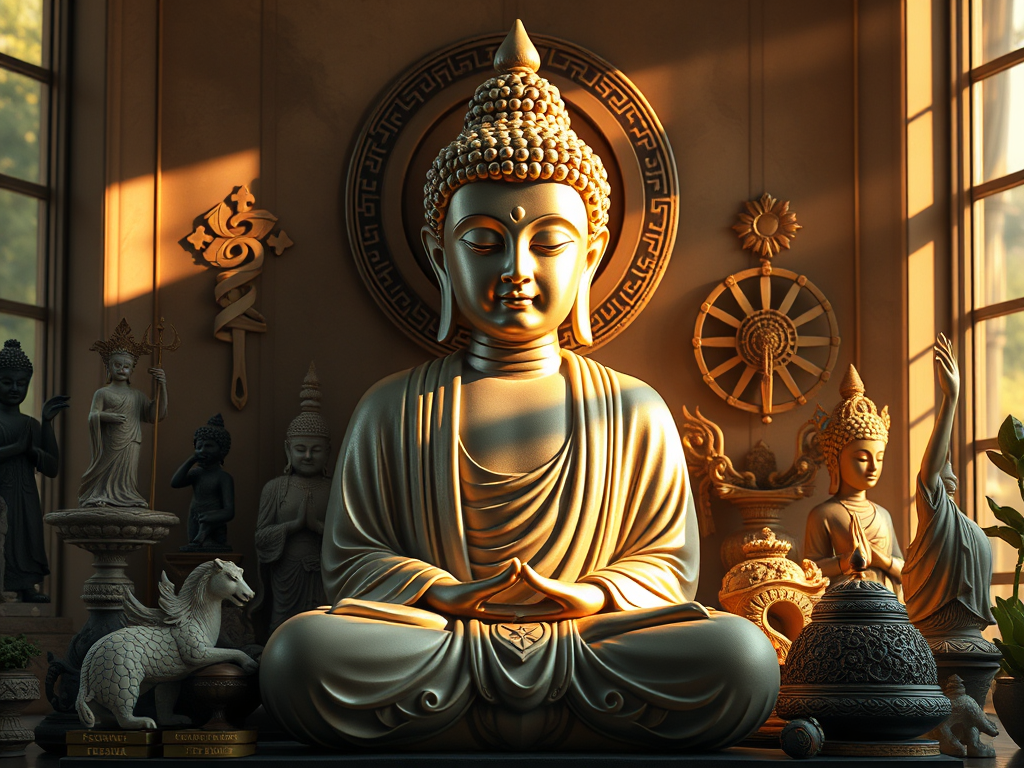

Can embracing religious (ethical) principles improve ourselves and society? While I will talk about Buddhism, most religions share common principles for improving oneself, those around us and the world we live in. Religion, especially Catholicism, has lost its way and support (especially in the rich countries), due to missteps by religious institutions. The sex and youth abuse scandals of the recent past follow a long list of abuse of power and oppression throughout history.
Can religion help all people and not just those who have reached a crisis point and look to religion for comfort? Can religion help the rich and successful, the squeezed middle and low-income earners? Help us search for prosperity with ethical principles? Steer us away from the harmful pursuit of wealth at all costs?
Love and Compassion
Buddhism speaks of love and compassion for all (a version of ‘Love thy neighbour’). That we are all connected, our personal ethics directly impact the well-being of society. Treating all people equally, regardless of their status, race, or relation to you. Rejoicing in others’ success helps reduce social envy and competition.
Many of us leave out sections of society from compassion because of the prejudices we hold. The poor and beneficiaries are excluded by some as ‘undeserving’. Prejudices against some races, the rich, and even family members are also common. In New Zealand, many demonise the Māori as lazy, not willing to work and even criminal. 92% of Māori are in paid employment. Māori unemployment tends to hover around 8% (criminality even less), yet the whole race is tarred as not willing to work.
Buddha talks about how a murderer was rehabilitated, yet many advocate for harsh punishment rather than mercy and rehabilitation, which has proven to be far more effective. This is why Norway has a 20% reoffending rate, while New Zealand has an over 60% rate. It’s why Sweden is closing prisons while we are building more of them.
Inequality
Our personal (and corporate) ethics impact society’s well-being. Lifting a country’s long-term economy and productivity requires lifting everyone. This is why the USA has so many social problems and turmoil despite its economic prosperity. There’s extreme wealth at the top and poverty and exploitation at the bottom. Globalisation and leaving behind a large section of people struggling in underpaid and insecure jobs have led to a backlash in many wealthy countries, fuelling populism and the rise of far-right parties. In New Zealand, dissatisfaction leads to emigration, with Australia the main beneficiary.
Materialism
To study, work hard and become wealthier is normal and healthy. Buddha warns against overdoing it – harming others (and us) in pursuit of wealth and spending the money earned. Some of us sacrifice our health and relationships, exploit those who work for us, engage in unfair trade practices, or avoid paying our fair share of taxes. It’s also about overattachment to material goods, as everything in life is impermanent and has a finite lifetime – they break, decay or get lost.
Compassionate communication
Don’t send that email when you are angry; pause and cool down. Using soft power and gentle communication in the right setting gets better compliance than harsh words. Avoid fake, hate and divisive speech – unfortunately, these are more prevalent than ever.
Generosity
They say it makes two people happy: you and the person receiving the gift. Whatever you like to give, whatever you can afford, can make a difference. Even in rich countries, families and children go hungry. (13%, one in eight children live in households with Material Hardship) Hunger is a lack of money, not a shortage of food – New Zealand produces enough food for 45 million people. Yet, our food banks are struggling to cope with demand.
Relationships
Buddhism says that kindness is the key to a good relationship. Kindness in thought, kindness in words and kindness in our actions. This might be the hardest of all the things we should be doing.
The Middle Way
Buddhism advocates the middle way, avoiding extreme asceticism and sacrifice, as well as extreme indulgence.
These principles are blindingly obvious but hard and require a lot of practice. The effort will be rewarding for you and society.
Leave a Reply